Blog

First time donors…kind of like that first date that never calls back

Woman with old telephoneI’ve got some good news and some bad news.  Which do you want first?

The good news is that for most nonprofit orgs, donations increase at the end of any given calendar year. The bad news?  You’ll never see 70% of those donors again. Sorry for the buzz kill.

Over on the Software Advice Non-Profit Blog, Mathew Mielcarek who — to be clear –laid down the buzz kill first, gives some advice on effectively engaging and retaining those donors.

Everyone knows I like me a well-done thank-you note.  But I also appreciate that Mathew helps us look beyond the thank you note, calling our attention to how that first gift offers insights that can help you engage donors in a more relevant way.  Those insights might seem blasé, e.g. gift amount or billing city/state, but when you’re paying attention, a little bit of boring can go a long way in terms of donor happiness…and therefore retention.

Creating an engagement approach based on donor details can keep your pitches from falling flat (and if they do, there’s always this).

Don’t mind the primate poop, dear donor

We all invite engagement from friends. I mean, Facebook exists, right? And last time I checked, no one was forcing us to read our news feeds. I don’t know about you, but my Facebook news feed is full of updates on the joys and challenges of parenting: videos of little Jimmy’s dance moves and photos of Susie’s first day of school. The people providing these updates are our friends, so we’re interested and invested.  The messenger matters.

This holds true for donor engagement as well. Consider our little buddy Miko here.  The Borneo Orangutan Protection Foundation provides “adoptive parents” of its primates access to a secure website, birthday cards, video updates and status reports from caregivers.  Sounds a little like Facebook, doesn’t it?

If the messenger is Miko, we’re happy to ignore his propensity to poop on our shoes while we ogle his cuteness. In fact, we expect this behavior…nay, I say, look forward to it. (“Isn’t it cute the way Johnny burps,” sweetly asks the new mother.) It is his unexpected behavior that makes him so compelling.

This organization also does a particularly good job of communicating from the folks on the front line, where so much the do-gooding happens.

What messengers are on your front lines?

Making them think or making them feel

Part of our jobs as do-gooders is to make people feel things. Because feeling things makes people do things…good things. One feeling that is particularly effective at generating engagement and action is empathy—the  ability to experience the feelings of another person.  Helping your audience feel the feelings of those they are—or can—help helps them see themselves in the story and encourages their participation.

This mailing from the UK’s National Asthma Campaign, circa 1991, is a good example of involving an audience in the story. Few can resist the invitation to experience 30 seconds of asthma, even if just out of curiosity. And then they immediately imagine their life with asthma. And they realize that life with asthma ain’t easy.

Don’t get me wrong, making people think is important too.  But we frequently bombard people with facts, when sometimes what we need to do is help them feel.

Videos: from ho-hum to mee-wow!

There’s no doubt that cat videos are all the rage online. There’s even an Internet Cat Video Film Festival. This feline obsession is for reals.

There’s something about cats that effectively mirrors the human experience. Obsession, surprise, melancholy.  The cats, they know how you feel.

In this clip from the Social Good Summit, Jessica Mason from YouTube for Good explains 3 lessons non-profits can learn from cat videos:

  • Tell universal stories
  • Engage regularly
  • Be surprising (yes, folks, this might require taking some risks and getting a little outside your comfort zone)

Taking a few lessons from cat vids might be the purrfect way to add a little mee-wow to your message.

Two quick apologies:
1. To the dog people: dogs are cool too. Totally cool.
2. Those of you who, like me, are totally allergic to cats and, therefore, get itchy just watching these vids. All in the name of making the world a better place, right?

(Photo credit: mashable)

Engagement starts with goats

goatI’ve been thinking about the concept of “engagement” a lot lately and boy do I have some      opinions on thank you notes that are engaging (or not), which I shared in a guest blog post over on Kivi’s Nonprofit Communications Blog.

Here’s a little history lesson, word-nerd style: the term engagement came into popular use in the 1600s and referred to a “formal promise”. It makes you think about the lead-up to that promise, doesn’t it? I mean, people don’t just willy nilly enter into formal agreements with other people unless they feel there’s a darn good payout on the other end.

Whether you’re talking about marriage, a business partnership, or a pinky promise at recess, when it comes to a formal promise, there’s an exchange of something that both parties value.

In the seventeenth century, when all this engagement business got its start, it could have been some goats or a parcel of land—each. But think about it today, in the context of your work. Supporters are gifting you their money, their time or their attention.  What are you doing to hold up your end of the promise?

(Image courtesy of chrisroll / FreeDigitalPhotos.net)

Stop talking to donors like donors

When you’re engaging donors, volunteers, board members, etc in your work, do you keep front and center the fact that:

Most people wear a bunch of hats and don’t think of themselves primarily as donors.

People think of themselves as a mom, dad, friend, daughter, brother, auntie, etc. Or, donning their professional hat, a barista, a nurse, a project manager, a student, a lawyer, a developer, a chef. etc. Or, donning their hobby hat, a runner, a yogi, a musician, a painter, a football fan, a poet, a knitter, etc.

“Well, duh, Erica!” you’re saying right about now. But admit it–when you’re ready to write an e-newsletter, a direct mail piece, a blog post, etc, you likely switch to thinking of the people on the receiving end of that communications first and foremost–and possibly solely–as donors. (It’s okay, we’ve all been there.)

Fundraisers focused on major gifts help people switch hats all the time. The good ones do this really, really well. When they sit down with someone, they know a lot about them. That’s what allows them to start out the conversation with what’s going on in that person’s life. They help them take off their “harried parent/busy professional/OMG-I-forgot-to-swap-out-the-laundry” hat and put on their “I-can-make-the-world-a-better-place-yihaw” hat. Did their son just head off to college? Is their niece in a dance recital? Did their dog just graduate to the next level of doggie school? They start the conversation there and then ease into a conversation about how their donations, investments, philanthropy and charitable choice.

So how do you apply this high-touch, in-person one-on-one fundraising technique to one-to-many marketing efforts? You do everything you can to make everything you do feel as personal as possible.

Two tips:

  1. Look at your list and figure out what hat the people on the receiving end will be wearing when they read or, more likely, quickly scan your piece. (Yes, yes, many people, many hats. Take your best guess. If you have no idea who anyone is on your list, you have a different problem, my friend.) Will they be in front of a computer, having just arrived at their office, slamming back a cup of joe before heading into a day full of meetings? Will they be at home on a mobile device, making dinner, switching out laundry and sifting through their personal email? Or perhaps they’re a retiree who enjoys more in-depth information and has the time to read longer pieces? Figure out their situation and write accordingly. Feed them the information they want, how they want it. (Hint within a hint: Look at your balance of ‘you’ to ‘we’. ‘We’ is usually followed by something about the organization. ‘You’ is usually followed by something about them. You want more ‘you’ than ‘we’.)
  2. Write everything with one person in mind. A real, live person who represents the type of person who will be reading the piece. (This is why personas are so important.) Write something they’d love to read. Others will love it, too.

Obviously, you shouldn’t stop talking to donors, volunteers and board members. But you should stop talking to them as if supporting your cause is the only thing they have going on in their lives. It isn’t.


Make good decisions, not more (picking a bone with Seth Godin)

Making too many decisions can turn you into a Bad Decision Dinosaur. Scary! (Photo credit: www.neurologicalcorrelates.com)

A few days ago, Seth Godin wrote a post in which he encouraged us to make more decisions. I beg to differ.

Seth’s point was that we are all fundamentally in the business of decision-making and that the only way to get better at what we do is by doing more of it.

Although this is true of many skills, I don’t agree it’s true of decision-making. In fact, making more decisions often leads to sloppy decision-making because you’re so busy rushing along to make the next decision that you don’t allow time to be thoughtful about the current one.

For anyone faced with  making decisions about which marketing strategy to adopt in 2013 and which tools to use to support that strategy, what you need to get good at is making good decisions–not more. (Of note, sometimes making a good decision means deciding a decision isn’t necessary, i.e. not worth your time.)

Often it’s a better use of your time to be assessing whether the decisions you’ve already made were good ones. Are they working? Are they delivering the results you want and need to be successful?

If Seth was lumping revisiting decisions in with making more decisions, I can maybe get on board with his advice. My advice? Make decisions about the decisions that really matter and make those well.

Bye bye boring thank you letters

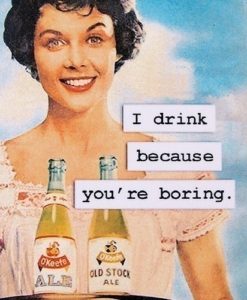
Don’t drive your donors to drink with boring thank you letters. Inspire them!

How many thank you letters have you received after making a donation that you remember? Go ahead. Count. It won’t take long. Most are totally and utterly un-memorable.

What a waste of paper and people-power.

Sure, you *have* to send an acknowledgement letter to everyone who donates to your organization. But acknowledging is not thanking. An acknowledgement doesn’t make the recipient feel all warm and fuzzy and good about what they’ve done. It makes them remember that soon they’ll have to file taxes. That’s stressful, not joyful.

Do your organization and everyone else a favor–turn your standard acknowledgement letter into a “thank you, you are awesome and we couldn’t do this without you because you ROCK” letter (or an equivalent that is appropriate for your organization’s brand).

Here are seven examples of awesome thank you letters from Lisa Sargent. They can do it. So can you.

In 2013, let’s say bye bye to boring thank you letters, shall we?

Two words to embrace in 2013

Banished words, words to avoid, words to embrace, Big Duck. lake superior state university
Words to avoid and words to embrace in 2013.

Lake Superior State University has unveiled its 2013 List of Banished Words.

These are 12 words and phrases that you should categorically not use in 2013 because they were so overused in 2012.  They range from ‘super food’ and ‘boneless wings’ (they’re just chicken pieces, people) to ‘YOLO’ and, of course, ‘fiscal cliff’.

I’m a fan of banishing, avoiding and snipping away words. (Here are five I advise you categorically avoid. And one very controversial  one–nonprofit–that I wish we’d all at least be more mindful of, if not avoid in its entirety.)

But there are times when adding a few carefully chosen words is a very good idea. Namely: when you’re having a conversation you hope will lead to further engagement.

When you’re talking to someone about coming to an event, or giving a gift, or volunteering, it’s easy to get so caught up in what you’re saying, that you forget to make sure they’re hearing you.

This is when a little thing called “tie-downs” can come in handy. Here are three examples:

  1. If asking someone to make a gift, you’d want to make sure they knew the impact their gift could have, wouldn’t you?
  2. When asking people to donate old winter coats, it makes sense to offer convenient drop-off locations, doesn’t it?
  3. Thank you notes should be sent in a timeline fashion, don’t you think?

Those words at the end are called tie-downs–little phrases that come at the end of a sentence that give the listener a chance to nod, smile, or say ‘yep’ or, possibly, ‘nope’. They can be the difference between a soliloquy and a conversation.

Caution: If you’re not used to using tie-downs, practice first. Otherwise, you risk sounding like a robot (pitchfall #1–oh no!) or like a valley girl (all upspeak and very hard to take seriously).

Big Duck will soon come out with their annual words to avoid (here was the 2012 list…go ahead, try not to chortle as you read it). Prune all of those words plus the ones on the Banished Words list from your 2013 vocabulary. That way, you can make room for tie-downs and other words you should embrace.

Because you want to be successful in 2013, don’t you?


The language of silence

Sandy Hook, silence, languageWe often look to language to help us make sense of the world.

When something like Sandy Hook happens, language fails us.

There are no words that can express the shock, the grief, the fear, the anger, the sadness that washes over us, for each of us in a different order and at a different frequency.

I invite you–as a fellow human being witnessing and experiencing this tragedy in your own way–to take a little time to simply be silent. I invite you to notice all that you feel, wish for and dream of–for yourself, for your loved ones and for this world–when you allow yourself to stop looking for words to make sense of it all.

In that silence we can all–hopefully and in our own time–reconnect with our belief that it’s possible to make the world a better place. And that it’s up to us to make it so.

“Be the change you want to see in the world.” Mahatma Gandhi


Do you communicate as effectively as you think?

X

Do you communicate as effectively as you think?

X