Blog

What non profits can learn from reality TV

reality TV, lessons, bachelorette, top chef, secret millionaire
[ Reality or not, we can learn from reality shows.
Yesterday, Microsoft launched their first reality show, Be the Next Microsoft Employee. It’s five weeks long and, at the end, one of the four contestants will be picked as the next Microsoft employee. It’s like Top Chef for geeks. (Full disclosure, I worked on this show…and, no, I won’t tell you who wins.)

Then there’s Secret Millionaire, ABC’s showcase of big-hearted millionaires who change the lives of others and, along the way, their own.

[Obviously, there are some bigger name reality shows. We could throw those into the mix, but I’m opting to focus on the two that have some “do goodness” to them.]

Be the Next and Secret Millionaire are very different shows, partially because one is web-based and one is a full-blown TV show and one is about employment and the other redemption.

But they have many things in common–as do all reality shows–and this is where there’s some transferable tidbits for DIY marketers.

Here are three take-away’s worth noting:

  1. People like drama. This is why the highs are so high and the lows so low on reality shows.
  2. People want to relate. Reality shows editors look at how to bring out the human element whenever possible.
  3. People get attached to people. They have their fav contestant and they are miffed when he or she gets booted off.

How do you, the non profit marketers of the world, parlay these into your marketing?

  1. Tell a good story. Make it interesting. Don’t water it down. You can tell a story that is both respectful and yet very, very interesting.
  2. Focus on individual people. We relate on an individual level. Tell your supporters about one person who exemplifies why you do your work and how you do it.
  3. Be mindful when someone who your clients, donors, and volunteers are attached to is leaving. It may just be staff turn-over to you, but can evoke the same “don’t vote my person off” emotions from others.

Any other lessons we can learn from all these reality shows?
I won’t give to non profits who use poor grammar

Last week, Kyle Wiens wrote a post for Harvard Business Review that unleashed a torrent of comments (724, at last count).

Kyle runs iFixIt and Dozuki. He hires a lot of people. He gives every single one of them a grammar test. For him, it’s a litmus of a candidate’s attention to detail. If you don’t pass the test, you don’t get hired.

This approach wouldn’t work for everyone, Wiens admits, but it works for him and, boy howdy, did people have opinions about his approach.

Most didn’t disagree that grammar is a pretty good proxy for attention to detail. What bugged them was that, in their opinion, Wiens didn’t use good grammar in the article itself. Nor syntax. And his word choices weren’t always up to snuff. None of these things are earth-shattering. Irksome, perhaps, but not huge deals in the Grand Scheme of Things.

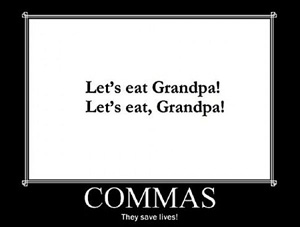
So why all the outrage? Everyone has their “thing”. Maybe yours is when someone uses “alot”. (The word doesn’t exist. It’s “a lot”.) Or “its” instead of “it’s”. Or maybe typos are like fingers on a chalkboard for you. These small things are a big deal to people. They represent something bigger.

A poorly placed comma may not fuss you a bit–but it’s not about you AND it might be costing you big time when it comes to engaging donors, volunteers and supporters. They all  have their “things”. Do you know what they are?

Health kicks brand butt by making it personal

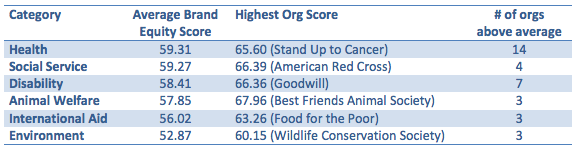
Harris Interactive recently released the findings from the 2012 Harris Poll Non-Profit EquiTrend Study. The study looks at how organizations in different categories do in terms of name recognition, perceived efficacy, and someone’s likelihood to donate to them.

Since most people care about causes in multiple categories, I was curious how the different categories compared to each other.

The take-away: organizations in the ‘health’ category are kicking butt when it comes to brand. (See super fancy chart below.)

Non-profit Brand Equity Table

Not only do they have the highest average brand equity score for a given category, but they also had 14 organizations that ranked above the category average. Social service non profits had a high score as well, but only 3 organizations ranked above average.

Translation: people have a strong awareness of, and a particularly strong connection to, health-focused non profits.

Begs the question: why is that?

Wasn’t it Peter Drury who said “People don’t give to you, they give through you.” The more personal the cause is to you, the more this distinction would matter. If you or someone you love has had cancer, your battle against cancer is personal. You’re kicking cancer’s ass in your, or their, behalf by giving to Stand Up to Cancer, the Leukemia & Lymphoma Society, or the American Cancer Society.

Although you’d think environmental issues would be personal–they’re protecting us against the demise of our natural environment and implosion of Planet Earth, after all–it suffers from “this issue is so big, I can’t wrap my mind around it” syndrome. It’s tough to feel that we, as individuals, will make a dent. The irony, of course, is that we are the only ones who can make a dent. But enviro non profits struggle to make this case well.

Organizations in all categories can learn from health organizations–make the connection to your organization personal.

On a scale of 1-10, how well do you make connections to your organization personal?


Thermodynamics, Ironman, and Ambassadors for Good

thermodynamics, mission, non profits
We can convert energy to make the world a better place.

Yesterday morning at 6:30am, I found myself bobbing on a dock watching 1,000+ wetsuit-clad people of all shapes, sizes, and ages hit the water as they began Lake Stevens Ironman 70.3. My husband, Rod, was among these kooky cats.

It makes you wonder what motivates people to do it.

For Rod, the answer was heart-breakingly straight-forward: he was doing it in honor of our friend, Sean Murphy, who had passed away doing the Coeur D’Alene Ironman a few weeks ago.

But most people there had never met Sean. (For the record, Sean was one of the most exuberant, awesome, full-of-life guys you’d ever have the great good fortune to know.) So why do something that grueling?

We often wonder what’s possible–physically, emotionally, mentally–but we don’t often push ourselves to find out. Every single one of the athletes yesterday was pushing themselves to find out.

As organizations, it’s even easier to convince ourselves to play it safe. Too risky, we tell ourselves. The funders/donors/supporters wouldn’t like it if we failed.

Is your goal for people to say that you’re cautiously plucking your way toward moderate mission impact? Likely  not.

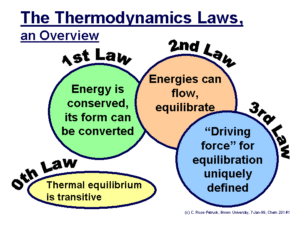
In his ‘Eulogy from a physicist’, Aaron Freeman makes a moving case for seeking solace in the first law of thermodynamics:

“According to the first law of conservation of energy, not a bit of you is gone; you’re just less orderly.”

This thought brought me a lot of peace as I watched all those athletes yesterday. It gave me a way to understand that Sean was there, even if we didn’t see him leap into the water.

That we can convert energy should be a call to arms–if the goodness that is you and your organization already exists and will always be here, shouldn’t we do what we can to harness as much of the universe’s energy so that those particles become Ambassadors of Good, forever on a mission to make the world a better place?

Sean was an Ambassador for Good. Rod did him–and all of us–proud yesterday when he raced on his behalf.

The Ironman may not be your thing. But making your supporters proud and doing good by your cause is. Please do so without ever apologizing for the boldness of your efforts and the limitless potential of your impact.

Raising money isn’t a goal

fundraising, non profits, marketing, goals, strategy, tactics
You raise money SO THAT you can make a difference.
Yesterday, we kicked off the latest Accelerator.

Setting goals is a BIG part of what we do on Day #1. Because if you’re not clear on your goals, you won’t get good results.

Raising more money is generally high on participants’ List o’ Goals. And so we always talk a lot about retention, acquisition, balancing the two, etc.

If, like them, fundraising is one of your goals, BEWARE! You’re risk of falling into a very tempting trap: believing that raising money is an end goal. It’s not. It’s a means to an end.

You raise money SO THAT…you can lessen summer learning loss.
SO THAT…struggling families can access life-changing resources.
SO THAT…we have forests to hike in and streams to play in.
SO THAT…small business owners can become financially fluent.
SO THAT…kids learn to express themselves through arts so they can thrive in school and in life.

In the day-to-day craziness of grant writing, donor stewardship, event planning and the like, it’s to forget that fundraising has a higher purpose.

Always finish the sentence: “We’re raising money SO THAT…”

What’s your SO THAT?

A tip from Bruce Lee

If you haven’t ever seen a Bruce Lee movie, stop reading this post and go watch one. (I’m a big fan of Enter the Dragon.)

Aside from being highly entertained, you’ll see the benefits of being at once fierce and fluid.

Bruce (we’re totally on a first name basis) encouraged people to “be like water”. Water can take on almost any form, but it always remains true to its essence. Whether it’s a crashing wave, a small pond, or a tiny droplet, it’s always water.

In the fast-paced world of mission-driven marketing, you want to be like water. You want to be crystal clear on who you are and what you stand for, while being able to fluidly adapt to new opportunities as they come along.

Be like water, my friends.


Canada, the US, Independence Days & Brand

4th of July, Canada Day, United States, brandI’m Camerican–born in Canada to American parents. Comparing and contrasting the two countries is inevitable.

Take, for instance, how we celebrate our respective Independence days.

Tomorrow, Americans will celebrate the 4th of July–a day of fun, festivities and fireworks. It’s a big deal.

Meanwhile, Canadians celebrated their Independence day on July 1–lovingly referred to as Canada Day or Canada’s birthday. It’s kind of a big deal. But it doesn’t hold a Roman candle to the hooplah that goes on in the U.S.

If both holidays are about the exact same thing–independence from Great Britain–why are they so different? Brand and history.

An exceptionally brief history lesson: Whereas the United States fought for its independence, Canada came into being because Great Britain decided to create a new country out of three existing colonies. <end history lesson>

Just like organizations, many elements inform a country’s brand. History is one of them.

Canada’s brand is understated. It is the mosaic to the American melting pot. Courtesy is currency.

Rabble-rousing and a serious independent streak are what got the United States its independence, so it’s no surprise its brand is more boisterous and extroverted.

Had the United States and Canada been formed in the same way, they might be more similar in terms of their brand. But, contrary to popular opinion, they’re really very different. (If you’d like a more exhaustive list of how they differ, email me and I’d be happy to enumerate.)

History matters. Why and how your organization came into existence matters. It’s where the story of your organization begins.

If you were going to have an independence day for your organization, when would it be? What makes that date significant?

Messaging Cheat Sheet inspired by the Cygnus Donor Survey


Demographics, fundraising, donors, messaging
Young and old may all give blood. But not for the same reasons!

Penelope Burke and the team at Cygnus Applied Research recently released the Cygnus Donor Survey: Where Philanthropy is Headed in 2012.  For fundraisers in the United States and Canada, this is a gold-mine. So much useful, practical, actionable info–it’s a must-read.

Some of the most interesting nuggets had to do with how to engage donors in different age brackets. In his most recent newsletter, Tom Ahern also addressed this issue. He reminded us that “To write persuasive copy, you need to see the person you’re writing to…in your head.” Tough to conjure up a mental image if you don’t factor in someone’s age.

The survey also revealed that two out of five donors could have given more last year but simply weren’t persuaded to do so.

Don’t leave money on table just because your messaging doesn’t factor in age and motivation.

Although far from comprehensive, here’s an extremely high-level “cheat sheet” for how to craft messaging to connect with three different (and admittedly very broad) age groups:

Under 35: Focus on your COMMUNITY and how they can help grow it. Make sure it’s easy to read on a mobile phone.

35-65: Focus on IMPACT. Real-life stories about what their dollars are doing with good stats to back it up. (Remember not to go right for the head, however. Heart then head. Heart then head. Repeat.)

65 on up: Focus on NEED. They’ve given enough to know the drill and they want to cut to the chase–what does your organization need. Make it clear and they are happy to oblige.

These aren’t mutually exclusive, mind you. Younger donors care about impact and older donors want to hear stories. You’ll be in good shape, however, if you focus on their main motivator first and foremost.

Mission-Motivated Messaging Checklist

mission, messaging, checklist. non profits
Got your why? Check!

This morning, I got to spend time at the PNAIS Advancement Conference. I did a session on Marketing Your Mission in 3 Easy Steps. No matter how many times I present on this topic, I’m always 1) humbled by the AMAZING work being done to make the world a better place and 2) reminded how little time we spend on the Why of it all.

Directly after my presentation, I got to hear Susan Howlett speak. Susan is responsible for transforming thousands of organizations through her work with boards. Her book Boards on Fire is setting the world of fundraising on fire!

In her session, Susan encouraged us to heed Simon Sinek’s advice to start with the why–and to keep going back to the why. Not just start with why, but to lead with why from start to finish. Sprinkle in some what and how, sure, but elevate the why.

For some reason, the mission-motivated of the world shy away from sharing their why. Why be shy about your why?

In an effort to stop this “Shy About Why” epidemic, I created a Mission-Motivated Messaging Checklist. The next time you are going to communicate about your organization, run down the following list:

  1. Why? Why does your organization exist? Why should someone care about what you’re doing?
  2. Why you? Of all the organizations out there, why should someone engage with you? What makes you special? Compelling?
  3. Why now? What makes now the time for someone to take action?
  4. What  now? What, specifically, do you want the person to do? Make it clear and make it easy. (Note: If you’re writing a Thank You note, for instance, the “action” might be to feel really, really good about the impact they’ve had. This isn’t a plug to always make an ask. It’s a plug for always being clear on what you hope the person on the receiving will feel and, when appropriate, do.)

If you address all of these, you’ll be in good shape.

Are you shy about your why? If so, why?


Marketing education & the environment

education, environment, marketing, mission
Education & environment may be different. How to market them is the same.

This week, I’ll give two presentations on how to market your mission–one at the Pacific NW Association of Independent Schools (PNAIS) Institutional Advancement Conference and one for the annual meeting of EarthShare Washington.

You’d think that your approach to marketing these two vastly different offerings–education and environment–would be vastly different.

It isn’t.

This is an important reminder–no matter what mission you’re marketing, you ask the same three questions to get you to a solid Marketing Action Plan (MAP).

  1. WHAT does success look like for our marketing?
  2. WHO do we need to reach to be successful?
  3. HOW can we most effectively reach the people who matter most to our success?

Can this get complicated? Well, sure. That’s why I created the 1, 2, 3 Marketing Tree. And why I created this short video to explain the approach. You too can become a lean, mean, mission-motivated marketing machine!

Do you communicate as effectively as you think?

X

Do you communicate as effectively as you think?

X